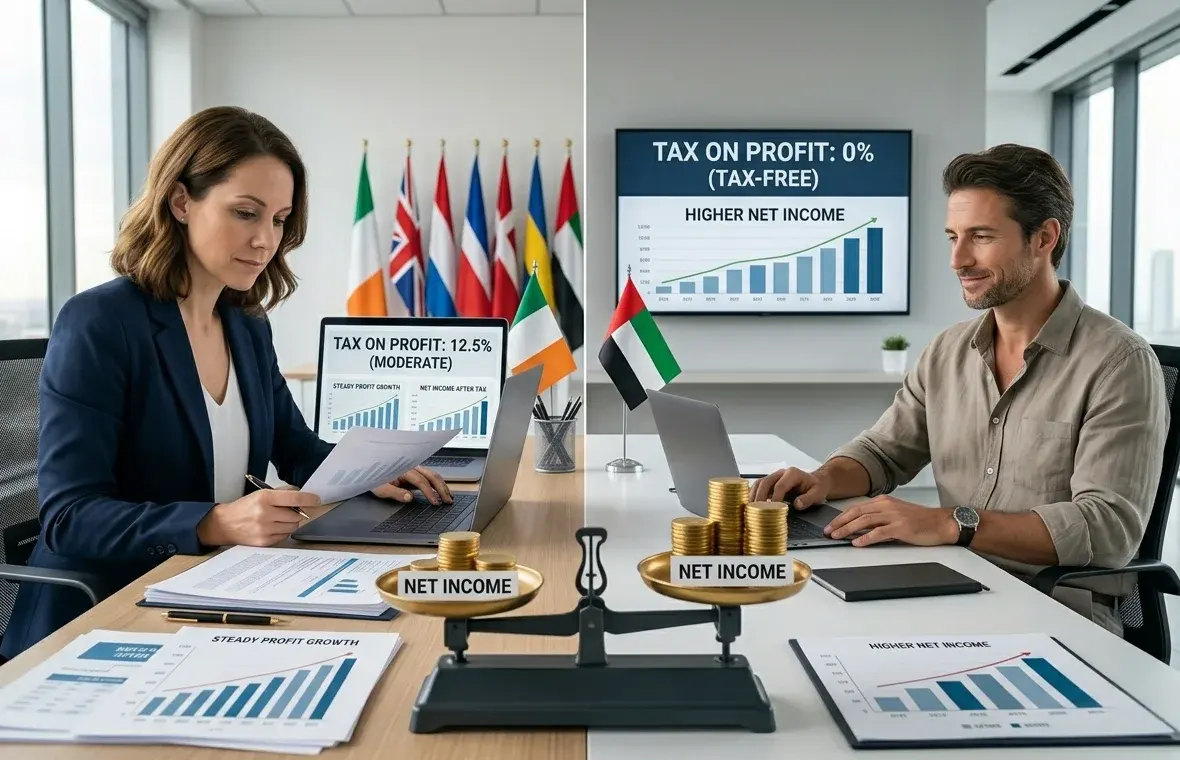
That first massive tax bill usually breaks people. You spend three years eating instant noodles, pulling all-nighters, pushing your startup into the seven-figure revenue bracket, and then a local accountant calmly explains that forty percent of your net profit now belongs to the government. It makes founders physically sick.
Their immediate reaction is almost always wrong. They jump online searching for quick fixes, reading outdated forum posts about opening anonymous accounts on remote Caribbean islands. Let’s be completely honest here. That offshore fantasy is dead. Global financial surveillance in 2026 operates on a level of ruthlessness that most people simply don’t comprehend, driven by OECD Pillar Two rules and algorithms that cross-reference Common Reporting Standard (CRS) data in milliseconds. If you try to open a corporate fintech account using a paper shell company from Belize today, the compliance officers won’t just reject you. They will freeze whatever funds you tried to deposit and flag your name. At Freeport Solutions, we spend half our time cleaning up these exact structural disasters. Surviving the modern regulatory landscape and keeping your profit margins intact requires actual architecture. Let’s strip away the polite consulting jargon and look at how real global players move capital.
What Is Business Tax Planning and Why It Matters
Mixing up the terminology here doesn’t just cost you money; it puts ambitious founders behind bars.
Legal tax optimization vs tax evasion
Evasion is a crime, plain and simple. It means you are actively forging documents, hiding cash, or lying about where your operations physically take place. Evasion destroys wealth permanently. True business tax planning, however, relies strictly on reading the written law and applying it. Governments intentionally write specific codes to provide legal pathways for companies to pay less because they are desperate to attract foreign capital and intellectual property. When our team helps you optimize taxes, we are utilizing massive established frameworks like the European Parent-Subsidiary Directive. You simply owe less money because your corporate setup aligns with international treaties.
Why structure matters for taxes
Your local accountant will almost always default to registering a standard domestic LLC for you. That is perfect if you own a neighborhood bakery. It is absolute financial suicide for a global software firm. Your corporate structure acts as the blueprint for your financial reality, and running cross-border sales through an unoptimized local entity bleeds capital daily. European ATAD 3 regulations actively hunt down fake shell entities now, making proper structuring the only viable way to separate your high-risk daily operations from your highly valuable passive assets legally.
Core Business Tax Strategies Used by Entrepreneurs
Smart money moves. It seeks efficient environments instead of just sitting inside high-tax jurisdictions waiting to be claimed by the state treasury.
Using multiple jurisdictions
Keeping every single asset you own in one country makes absolutely no sense today. Elite founders utilize flag theory. Executing core business tax strategies involves incorporating your operating companies where the corporate rates sit low, keeping your banking in jurisdictions where privacy laws remain stable, and establishing your physical residency where dividend income is treated favorably. This approach completely separates your personal wealth from your corporate liability.
Separating operations and profits
Holding your intellectual property inside the exact same company that processes direct customer payments is incredibly dangerous from a litigation standpoint. We isolate valuable IP—whether that is software code, brand trademarks, or patents—inside one specific jurisdiction while running the active sales through entirely different ones. The operating entities then pay licensing royalties back to the IP holding entities. This mechanism legally shifts profits into lower brackets automatically, assuming the transfer pricing is set at standard market rates.
Choosing the right company structure
Picking the wrong entity ruins profit margins immediately. Operating as a sole trader after hitting massive global revenue is madness, so transitioning into limited liability structures becomes mandatory very quickly. Sometimes you need specialized limited partnerships. A functional tax planning business model demands constant, aggressive evolution as your revenue climbs.
How to Reduce Company Tax with International Structures
Ignore the online ads selling cheap offshore company papers. Modern banking compliance departments will literally laugh at them.
Offshore vs onshore strategies
Classic offshore banking is completely dead. Try wiring money from a pure zero-tax island to an enterprise vendor in Frankfurt today; German compliance officers will freeze the transfer instantly pending a massive investigation. If you want to know exactly how to reduce company tax safely and reliably, you go mid-shore. You use highly respected EU jurisdictions. Cyprus gives businesses a 12.5% baseline rate, but dropping effective rates near 2.5% is entirely possible if you properly utilize their IP Box regime. Malta uses a deeply entrenched shareholder refund system that drives effective corporate rates down toward 5%. These are highly respected onshore hubs offering massive leverage.
Holding companies and distributions
Founders should never own their active operating companies directly as private individuals, as it triggers massive personal liability and usually terrible dividend taxation upon withdrawal. You place a holding company directly between yourselves and your active businesses. Switzerland remains an absolute powerhouse for establishing these holding structures today, allowing for tax-free dividend routing under specific participation exemption treaties. Proper holding layers protect accumulated capital like a fortress.
Corporate Tax Strategies for Different Business Models
A logistics firm requires completely different architecture than a digital marketing agency. One size fits nobody.
Online and digital businesses
Complete location independence gives software founders massive leverage. If your entire development team works remotely, paying 30% corporate rates in Paris or London makes zero financial sense. The UAE recently implemented a 9% corporate rate above 375,000 AED thresholds, but specific Qualifying Free Zone Persons can still access 0% rates for qualifying activities. Implementing proper corporate tax strategies in Dubai means proving local economic substance, but the cash savings remain staggering for digital creators.
E-commerce and global sales
Moving physical boxes across international borders triggers VAT nightmares. Amazon FBA sellers are constantly crushed by this compliance overhead. Implementing solid business tax tips in e-commerce means establishing specific entities dedicated solely to handling physical logistics and customs, while a totally separate entity holds the brand trademarks. This cleanly separates messy operational headaches from the pure profit centers.
Consulting and service businesses
Selling brain power means possessing ultimate geographic mobility. Earning high consulting fees while living inside a high-tax domestic country means surrendering half your income annually. Setting up smart cross-border service agreements keeps that capital safe. Figuring out how to reduce business taxes in this sector requires billing your enterprise clients using optimized international setups while ensuring that critical management decisions physically happen outside your high-tax home country.
How to Optimize Taxes Without Breaking the Law
Regulators run advanced matching algorithms 24/7. You have to build reality, not paper fiction.
Substance and compliance requirements
Fake shell companies are useless. Want to utilize a Cyprus company? You need a real physical desk in Nicosia and local directors making actual, documented management decisions. Applying sophisticated tax smart strategies requires spending real money to prove your foreign setup exists physically. Cut corners regarding economic substance, and regulators will gladly pierce your corporate veil immediately.
Banking and reporting obligations
Algorithms track cross-border flows constantly. CRS frameworks mean banks automatically share your financial data internationally. Hiding accounts fails every single time. At Freeport Solutions, we disclose everything proudly because our corporate structures follow local laws perfectly. Transparency is your only real armor in 2026.
Common Tax Planning Mistakes
Founders routinely destroy their own wealth by making stupid structural decisions early on. We fix these specific mistakes constantly.
Wrong jurisdiction selection
Founders search for zero-tax islands online and incorporate blindly, ending up with completely useless papers. If you sell B2B services to German or French enterprise clients, they will actively refuse to pay invoices sent to pure tax havens due to the massive withholding taxes they would face. You must choose jurisdictions your clients actually respect.
Ignoring long-term tax impact
Moving out from your home country? Watch out for brutal exit taxes. Regulators will calculate your company’s theoretical market value and tax you heavily just for attempting to leave their system. Plan your exit years before you actually pack your bags. Waiting too long triggers massive capital gains events that destroy operational capital.
Tax Strategies for New Businesses
Fixing a broken corporate structure costs ten times more in legal fees than building it correctly initially.
Tax planning for new business
Don’t wait until you are making millions before starting the architectural planning phase. Executing proper tax planning for new business setups early saves massive restructuring fees later. Get your holding companies fully placed while company valuations sit at absolute zero. Transferring founder shares later, when companies gain significant market traction, triggers massive capital gains hits.
When to restructure
When your revenue spikes, corporate structures must adapt to protect it. Breaking €100k means switching away from sole trader status immediately. Hitting €1M means it is time to establish international holding structures. Sticking stubbornly with outdated, localized setups stunts your growth and bleeds cash reserves unnecessarily. Audit your structure every single year.
Building a Tax-Efficient Structure
Nobody is going to hand you generational wealth freely. Paying unnecessary statutory levies just means you have failed to grasp basic corporate architecture. Stop acting like a helpless victim facing complex local tax codes and start acting like a serious global player.
Head over to freeport.solutions today. Our legal architects will analyze your specific revenue streams deeply, building bulletproof structures that respect strict 2026 international regulations while keeping your cash flowing legally, safely, and efficiently across borders. Stop guessing about international law and let’s get to work.